
SMETA Audit: A Complete Guide for Indian Suppliers

A SMETA Audit for Indian suppliers (SEDEX Members Ethical Trade Audit) is an internationally recognized social audit approach that is used to review the supply chain operations, ethical practices, and adherence to local laws.
Created and developed by SEDEX, SMETA is one of the world’s most widely used social audit methodologies. This audit is built around some essential pillars that are evaluated against the business supply chain operations to ensure standards of labour, health, and safety. It is not a certification scheme but an audit approach that delivers a Corrective Action Plan that helps improve performance in these key areas. If you are a growing business and wondering what exactly an SMETA audit is, this comprehensive guide is for you.
Take a closer look at its definition, benefits, process, key elements, and more, and gain crucial insights into how to conduct SMETA audit preparation.
Table of Contents
What is SMETA?
SMETA stands for “Sedex Members’ Ethical Trade Audit”. It is a popular social audit methodology that evaluates whether businesses are appropriately treating their workers and following ethical labour practices. It focuses on vital domains, such as workers’ rights, health, safety, environmental protection, and transparent business practices.
At the time of SMETA audit is conducted on-site by an auditor working through a Sedex-approved Affiliate Audit Company (AAC) arrives at the business location and checks the overall working conditions and practices. This helps businesses make sure that their workers are treated well, the workplace is safe, and that their suppliers follow responsible practices.
Businesses often partner with a reliable SMETA audit consultant in India to gain insights into how to prepare for this audit and make business operations better.
What are the Four Pillars Of SMETA?
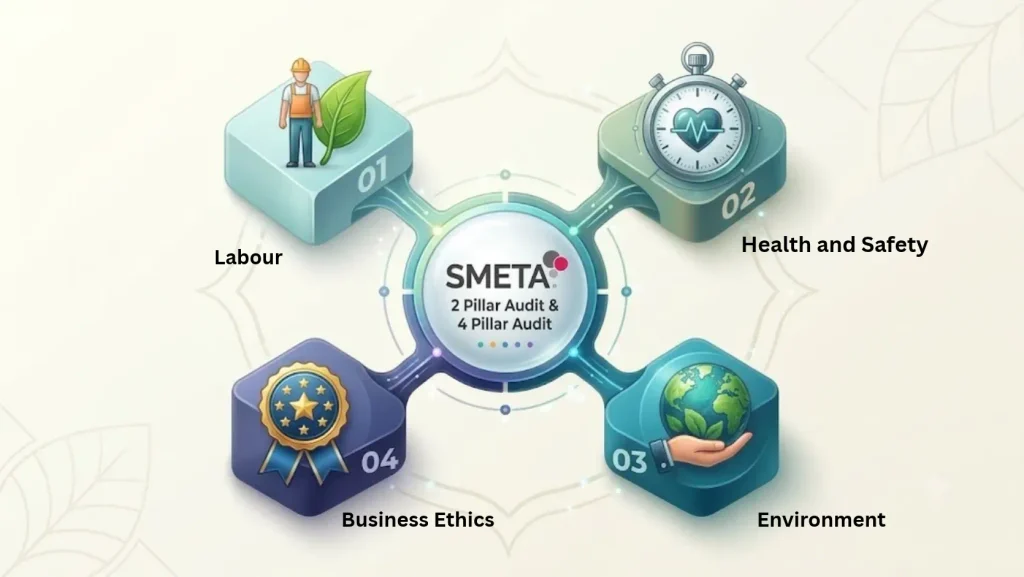
SMETA audit for Indian suppliers is established on four key pillars. However, they can also be conducted under either the 2-Pillar or 4-Pillar scope.
These foundations help businesses understand the rules for fair working conditions and responsible business operations. Here is a brief overview of each:
| SMETA Pillar | What It Covers |
| 1. Labour Standards | Checks workers’ rights, fair wages, working hours, and fair treatment. |
| 2. Health and Safety | Checks whether the workplace is safe and protects workers from health risks and accidents. |
| 3. Environment | Reviews how businesses manage waste, water, energy, and other environmental concerns. |
| 4. Business Ethics | Checks risks related to bribery, corruption, and dishonest business practices. |
The 2-Pillar audit covers Labour Standards and Health and Safety, while the 4-Pillar audit also includes Environment and Business Ethics. The audit scope should be selected based on the buyer’s requirements and the latest SEDEX guidelines.
What are the Benefits of SMETA Audit For Indian Suppliers?
SMETA Audit provides a range of benefits to Indian suppliers in the following ways:
- Efficient Supplier Auditing: There is no need for repeated audits, as buyers can check workplace practices through one structured audit process, which is SMETA. Thus, efficient supplier auditing is a guaranteed benefit.
- Ensures Compliance: During SMETA audit preparation, suppliers can easily identify gaps in labour operations, workplace safety, and supply chains. This helps avoid bigger issues later.
- Strengthens Brand Reputation: When suppliers follow all essential SMETA audit requirements, it helps them improve their reputation and build better business relationships.
- Adherence to Laws: SMETA helps businesses identify areas where their practices may not fulfill applicable legal requirements and take steps to address them. This ensures proper adherence and regulatory compliance later.
What’s New in SMETA 7.0?
SMETA 7.0 was officially launched in September 2024 by Sedex. Therefore, as per SMETA audit preparation for this version, Indian suppliers need to adhere to following set of rules:
| Key Changes | Explanation |
| Workplace Requirements | Sets clearer expectations for workplace standards. |
| Management Systems Assessment | Checks systems used to manage workplace risks. |
| Collaborative Action Required Findings | Identifies issues requiring joint action and improvement. |
| Better Risk Identification | Helps identify supply chain risks earlier. |
| Sustainability Commitment | Supports ethical practices and responsible sourcing. |
| Supply Chain Resilience | Builds stronger, more reliable supply chains. |
| Regulatory Alignment | Helps address changing laws and industry standards. |
SMETA Audit Preparation: Key Steps For Indian Suppliers
Indian suppliers need to follow some essential steps for a successful SMETA Audit. However, if you do not have any idea regarding how to start, you can consider hiring a SMETA audit consultant in India, who can help you navigate all the steps easily and effectively.
- Register with Sedex: Sign up for the Sedex platform and get a Sedex Company Reference (SCRC) number.
- Fill out the Self-Assessment Questionnaire (SAQ): Complete the online SAQ, which includes information related to the business practices, safety measures, and labor practices exercised by your organization.
- Select the Audit Type: Depending upon the requirements of the exporters or local buyers, choose between a 2-Pillar or a 4-Pillar audit.
- Appoint an Approved Auditor: The next step in the SMETA audit checklist is to arrange the audit through a Sedex-approved Affiliate Audit Company (AAC) to perform the on-site inspection. Costs generally depend on factory size and location.
- On-Site Audit & Worker Interviews: As part of SMETA audit requirements, the auditor has to check documentation for payroll records, attendance, and statutory documents, walk through the factory, as well as hold interviews with workers on condition their statements remain confidential.
- Report on the Corrective Action Plan (CAP): You are obliged to fulfill the requirements laid down in the report on corrective action if there are shortcomings that have to be identified in the facility.
A Final SMETA Audit Checklist
Here is a complete overview of the SMETA audit checklist for Indian suppliers. Ensure that your business is ready for this assessment by following the given conditions:
- Review employee files, including salary and working hours.
- Make sure that labor contracts are up to date
- Ensure compliance with health and safety measures.
- Test the firefighting mechanisms and exit points.
- Maintain training records of the employees.
- Examine the environmental practices.
- Detect corruption and malpractices.
- Examine the suppliers’ records and procedures followed.
- Identify problems and correct them.
- Make sure that all the documentation is in place for the SMETA audit.
Conclusion
SMETA audit for Indian suppliers allows them to identify problems in their business operations, enhance their working environment, and comply with ethical business practices. Doing the audits regularly and keeping appropriate records makes the audit process easier and creates a trusting relationship with the buying companies. However, it is always advised to take professional assistance if you find audit preparation challenging.
As your trusted SMETA audit guide, True Advisor provides end-to-end assistance in preparing Indian suppliers for SMETA audits, which includes comprehensive suggestions regarding the requirements, the documentation, and the needed implementations. Our team also assists you with proper documentation, necessary approvals, and the entire steps for audits to ensure comprehensive support. So, partner with us and make your SMETA journey easy and stress-free.
Also Read: ISO 9001 Certification Process in India: Step-by-Step Guide
Frequently Asked Questions (FAQs)
1. Who needs a SMETA audit: buyers, suppliers, or regulatory bodies?
Usually, buyers need SMETA audits from Indian suppliers. It helps them understand the working conditions of the organization, adherence to ethical practices, and responsibility towards daily business operations.
2. What are the main areas covered in a SMETA audit?
SMETA audits for Indian suppliers cover labour standards, health and safety, environmental practices, and business ethics to identify risks and improve workplace conditions.
3. Do I have to be a Sedex member to share my SMETA audit with my customer?
Yes, businesses generally need Sedex membership to share their SMETA audit through the Sedex platform with customers.
4. Why is SMETA important for buyers?
SMETA helps buyers assess supplier practices, identify risks, encourage fair working conditions, and make responsible sourcing decisions.
5. Why should I partner with True Advisor for a SMETA audit?
True Advisor can guide your business through SMETA requirements, document preparation, and audit readiness, helping you understand and address gaps.